
Definition of Organizational Strategy
In enterprise performance management (EPM), your Organizational Strategy is the plan leaders set to deliver the mission and reach the vision. It defines or reviews your mission and vision statements, and it maps the steps to get there. Most importantly, a clear organizational strategy helps everyone understand where the business is going and how their daily work advances those plans.
Organizational Strategy Process
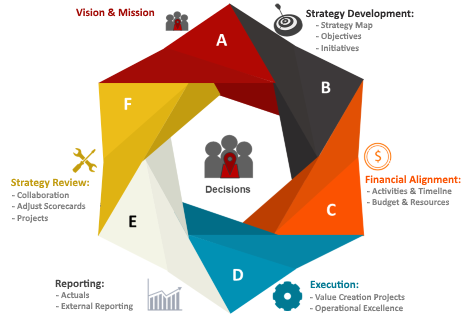
Usually, the process starts with an executive retreat, where leaders set the top priorities.
1. Strategy definition:
Next, each area contributes to defining goals, strategies, and targets. These often become projects or initiatives, with milestones due on specific dates.
Teams also track them as Key Performance Indicators (KPIs), comparing targets against actual results for a given period.
2. Financial and Operational Alignment:
From there, the organization allocates financial and operational resources, then links the strategy to the budget.
3. Execution
Once leadership approves the budget, execution begins. Teams collect results and compare them against targets.
4. Reporting and Review
Finally, the organization reports on progress, reviews the numbers, and adjusts the strategy as needed.
Challenges of Organizational Strategy
Too often, the strategic plan ends up as a PDF buried on a website, while employees keep doing exactly what they did before. Building a real strategic planning culture is hard, and the obstacles are many. For a deeper look, read our post on the most common challenges and how to work around them.
Software as an option
Often, the right tool structures your strategy and shares it across the organization. Software that manages organizational strategy, such as Cipher SPEAR, also collects data, manually or automatically, and shows how individuals, departments, and the whole company are performing.
The goal is straightforward: instead of spending valuable resources on collecting data and writing reports, you enable your team to focus on top priorities, hit targets, mitigate risks, and respond quickly to new challenges. Below are some of the tools we use to deliver this value to our customers.
In many cases, a tool helps expose that strategy in a structured way and publish that information to other users in the organization.
Check below some of the tools we have used to deliver this value to our customers.
Cipher's Advantage
We have successfully delivered many organizational strategy projects, so we can review your current plan and standardize the process. As a result, your team spends less time collecting information and reporting results, and more time understanding performance and acting on it.
Case Study
Organizations worldwide run strategy execution on Cipher SPEAR, backed by Cipher's deep SAP Strategy Management experience.
On Cipher SPEAR:
- Nebraska Public Power District migrated from SAP Strategy Management to Cipher SPEAR. Today its CEO presents year-end results directly to the Board of Directors, using a Balanced Scorecard strategy map to walk the board through priorities and KPIs. Watch the relevant section of the board meeting below.
- Royal Eswatini Sugar Corporation runs strategy execution for 150 users on SPEAR, drawing on both SAP and non-SAP data.
- A nuclear energy operator in the UAE manages strategy across multiple entities and 100 users on SPEAR.
- An Ethiopian power utility tracks its scorecards and KPIs on SPEAR.
SAP Strategy Management track record:
Cipher has implemented SAP Strategy Management across the public and energy sectors.
- Government: the cities of Boston, Houston, McKinney, and Henderson.
- Energy: a Middle East energy organization and a national oil company in Mexico.
Infor d/EPM:
- T. Hasegawa, a global flavor manufacturer, implemented Infor EPM with Cipher.
See more on our case studies page.
Applications
SPEAR
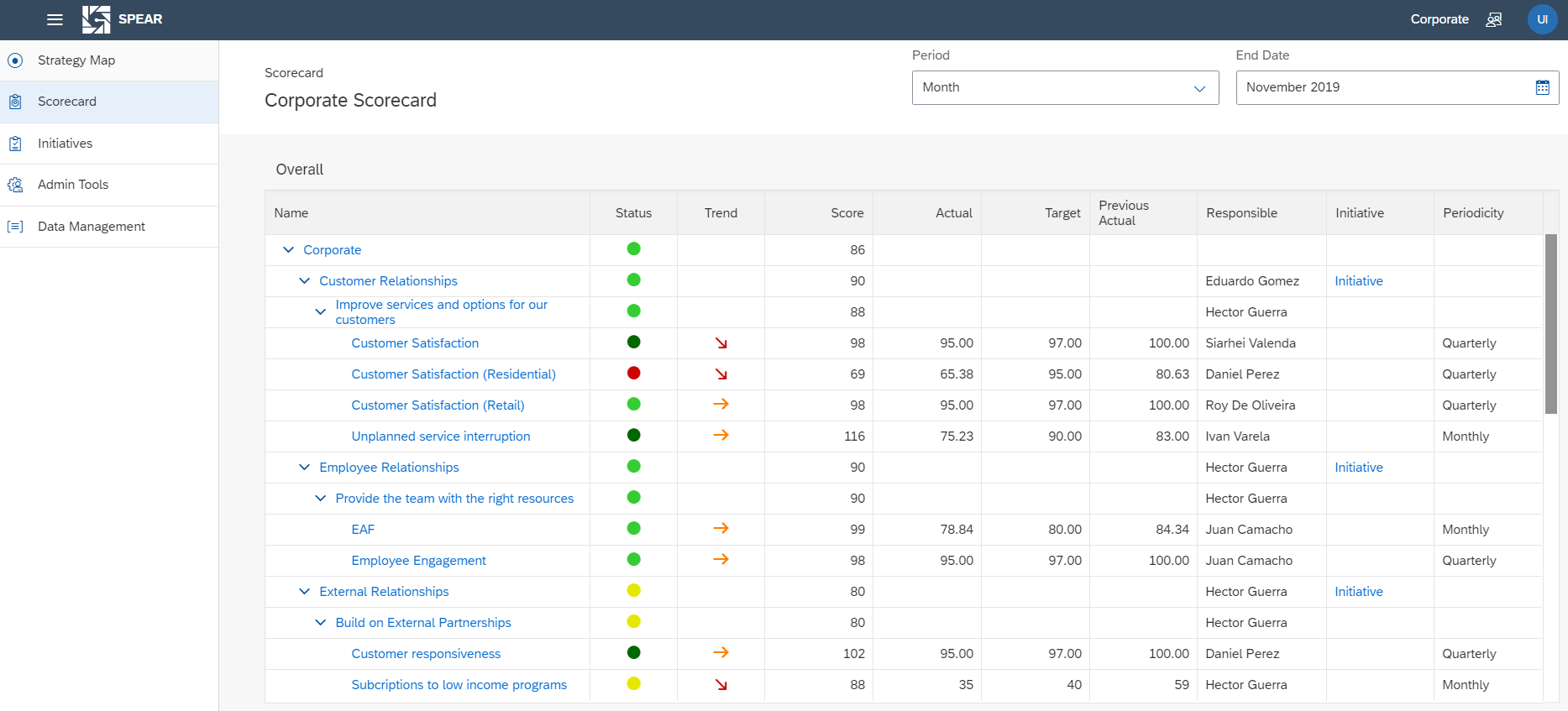
Cipher SPEAR stands for Strategy, Planning, Execution, and Reporting. It closes the gap between strategy and execution.
With SPEAR, you publish your corporate strategy and show how it cascades to every level of the organization. Then you set strategic goals, monitor performance against them, and align resources to act on the results. SPEAR also includes Digital Brain, its built-in AI. Digital Brain explains the root causes of KPI gaps, surfaces insights from your historical data and expert knowledge, and accelerates analysis without adding headcount.
SAP Sustainability Performance Management (SuPM)
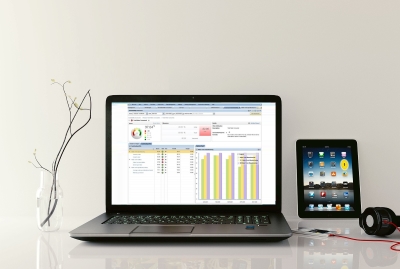
The SAP BusinessObjects Sustainability Performance Management application enables organizations to manage their economic, social and environmental performance.
Predefined content is offered out-of-the-box including a list of KPIs provided by the Global Reporting Initiative (GRI)
SAP Strategy Management (SSM)
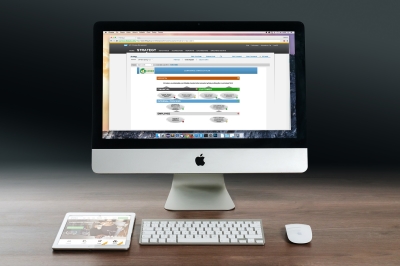
SAP Strategy Management allows organizations to configure their Strategy, cascade it down to all the areas and monitor performance with KPIs and Strategic Initiatives.
SSM Provides a set of pre-defined view such as Scorecards and Initiatives diagrams along with customizable Strategy Maps and Ad-hoc reports.
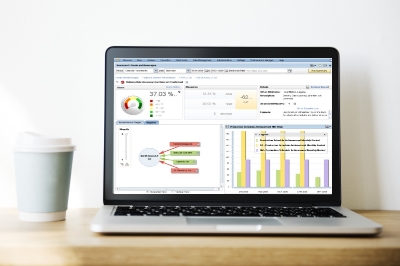
SAP Supply Chain Performance Management (SCPM)
SAP BusinessObjects Profitability and Cost Management (SPCM) is a highly scalable application that enables the business users to improve profitability by different parameters such as products, customers and channels.
Organizations can configure Scorecards based on the Supply Chain Operations Reference (SCOR) model while interacting with an intuitive interface.