
SAP NetWeaver Business Warehouse (SAP BW) is SAP's data warehouse: it extracts data from SAP and non-SAP systems, models it into a consistent structure, and serves it to reporting and planning tools. For many organizations, it is still the layer where "the numbers" officially live.
It is also, increasingly, a layer people are trying to get data out of. That is the work Cipher does most on BW, and it is the reason this page exists.
What is SAP BW?
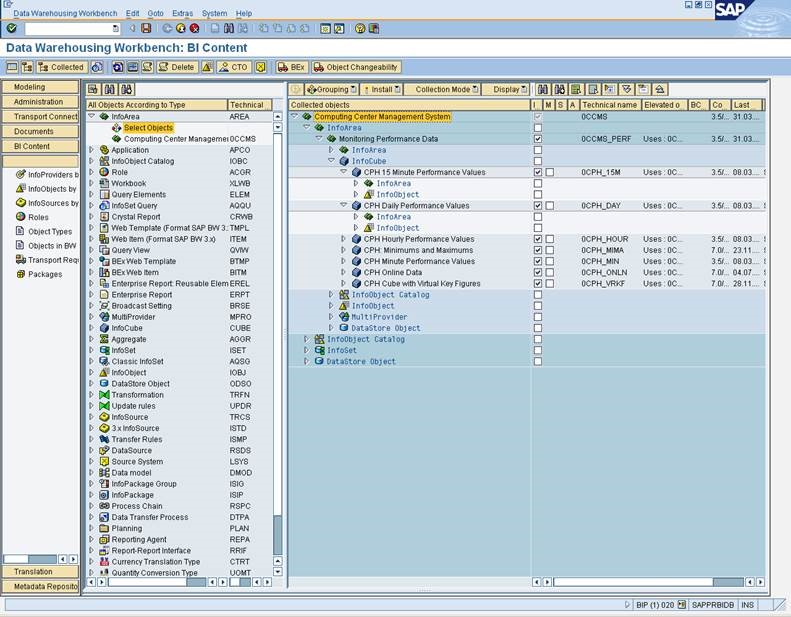
SAP BW sits between your source systems and the people who need answers. It performs three jobs:
- Extract and load. Data arrives from SAP ECC, S/4HANA and non-SAP sources through extractors, staging layers and scheduled loads.
- Model. InfoObjects, InfoProviders, DSOs and composite providers turn transactional rows into dimensions, key figures and hierarchies that a business person recognizes.
- Serve. Queries and providers expose that model to reporting, planning and analytics tools sitting above it.
The value is not the storage. It is the modeling. A well-built BW layer encodes years of agreement about what a customer is, how a cost center rolls up, and which version of a figure is the official one. That accumulated logic is why BW estates are hard to replace and why they outlive the projects that built them.
SAP BW, SAP BW/4HANA and Business Data Cloud
People use these three names interchangeably, but they are not the same.
- SAP BW (often SAP BW 7.x on NetWeaver) is the classic data warehouse, running on a traditional database or on SAP HANA.
- SAP BW/4HANA is the rebuilt, HANA-only successor. It is a smaller object model, not a version upgrade you apply on a Tuesday. Moving to it means converting or rebuilding a meaningful share of what you have.
- Business Data Cloud is where SAP now positions the future of this stack, in the cloud and alongside its wider data estate.
If you are researching this because someone asked "what happens to our BW?", that question is really three questions: what does the platform change cost, what happens to the models we depend on, and what happens to every report and planning application reading from them. The third is the one that gets underestimated, and it is the one we get called about.
Where SAP BW reporting gets difficult
The recurring problems we see are rarely inside BW itself.
- Getting data out is harder than getting it in. BW is built to consolidate. Feeding a planning tool, a scorecard or a modern analytics layer means a deliberate egress design, not an afterthought.
- The model and the consumer drift apart. A BW model changes, and the extracts and mappings feeding everything downstream quietly stop matching. Nothing errors. The numbers just stop agreeing.
- Nobody owns the join. The BW team owns BW. The planning team owns the planning tool. The interface between them belongs to whoever built it, who has usually moved on.
- A platform move breaks the connection, not the warehouse. BW to BW/4HANA, database to HANA, on-premise to cloud: the warehouse gets migrated carefully, and the integrations that depend on it are discovered afterward.
What Cipher does with SAP BW data
Cipher is not a BW implementation shop and does not resell SAP licenses. Our BW work is almost always integration work: taking data that already lives in BW and making it usable in the planning, scorecarding and reporting layers above it.
That has included:
- BW as a source for strategy management. Pulling actuals out of BW to populate KPIs and scorecards in SAP Strategy Management, including builds using a BAPI interface to move values from BW into SSM on a scheduled basis rather than by manual entry.
- BW as a source for Cipher SPEAR. Feeding the same class of data into SPEAR, the strategy execution platform we build, so measures update from the warehouse instead of from a spreadsheet.
- BW as a source for reporting projects. Extracting and re-modeling BW data so it can drive operational and management reporting outside the BW query environment.
The differentiator worth stating plainly: the hard part is not the warehouse and not the tool above it. It is the connection between them surviving a version change, a platform move, or a model redesign. Those two systems rarely move together, and the extracts and mappings have to be re-pointed whenever one of them does.
Planning a move off BW? Plan the reporting alongside it
Whether the destination is SAP BW/4HANA, Business Data Cloud, SAP Analytics Cloud, or something outside the SAP estate, the same sequence keeps failing: migrate the warehouse first, discover the dependent reporting second.
The better order is to inventory what reads from BW before anything moves. Which extracts exist, what they feed, who relies on the output, and which of them nobody has looked at in three years. That inventory usually shrinks the migration, because some of what you're carefully preserving turns out to be unused.
We apply the same principle when an ERP moves underneath a reporting layer: the approach is identical; only the source changes.
Talk to a consultant about your SAP BW estate
If you are deciding what happens to a BW estate, or you need BW data somewhere it is not today, a short conversation will tell you whether this is a problem worth engaging on. No slides.
Book a free consultation about your SAP BW data
Related reading: SAP ERP reporting as an alternative to BW · SAP Analytics Cloud · SAP ECC modules · Extracting SAP Analytics Cloud data to HANA with Smart Data Integration